Tips for Creating a Relaxing and Productive Home Workspace
Creating a home workspace that is both relaxing and productive can make a significant difference in your daily work routine. Whether you work remotely full-time or occasionally need a quiet spot to focus, designing a space where you feel comfortable and efficient is essential. In this post, we’ll explore practical tips for setting up a home office that supports your work goals while maintaining a calm atmosphere.
Benefits of a Well-Designed Home Workspace
Before diving into tips, it’s important to understand why your workspace setup matters. A well-organized and inviting workspace can:
– Boost your concentration and efficiency
– Reduce stress and mental fatigue
– Encourage better posture and comfort
– Help separate work time from relaxation time
Keeping these benefits in mind will motivate you to create a space that works for you.
Choosing the Right Location
Find a Quiet Spot
Select a part of your home that is generally quiet and free from distractions. This might be a spare room, a corner of your living room, or even a section of your bedroom. The key is to have a dedicated space that signals “work time.”
Consider Natural Light
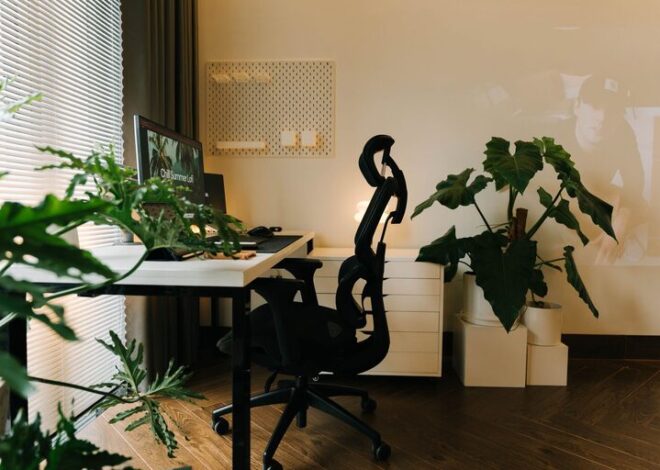
Try to position your desk near a window to let in natural light. Sunlight helps improve mood and alertness. If natural light is limited, invest in good-quality artificial lighting that mimics daylight without causing glare.
Ergonomic Setup for Comfort
Invest in a Good Chair
A comfortable, supportive chair is crucial. Look for adjustable chairs that promote good posture and reduce strain on your back and neck.
Desk Height and Placement
Your desk should be at a height where your forearms are parallel to the floor when typing. Keep your monitor eye-level to prevent neck strain. If possible, use a desk that allows for both sitting and standing options.
Organize Your Essentials Within Reach
Place frequently used items like pens, notebooks, and your phone close to avoid repeatedly reaching and breaking focus.
Declutter and Organize
Keep Surfaces Clear
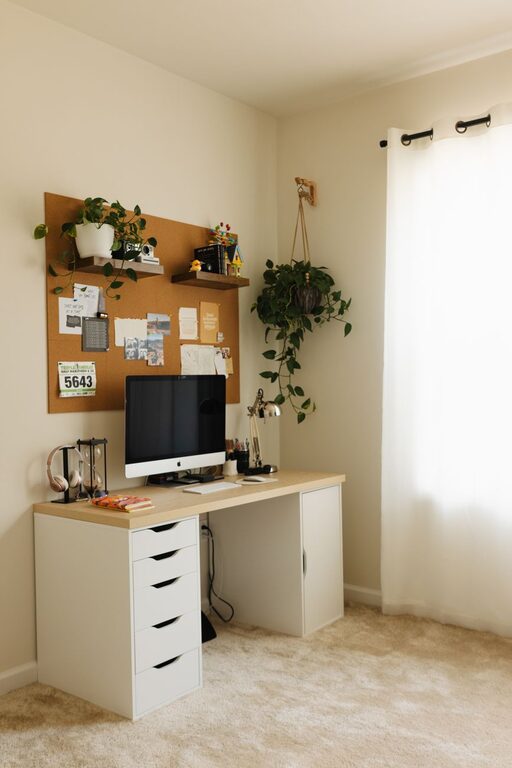
A tidy workspace helps reduce stress and distractions. Use storage solutions like shelves, drawers, or organizers to keep clutter out of sight.
Use Cable Management
Unruly cables can make a space feel chaotic. Use clips, ties, or under-desk trays to keep wires neat and organized.
Create a Filing System
If you deal with a lot of papers, establish a simple filing system to avoid piles and confusion.
Add Personal and Relaxing Elements
Incorporate Plants
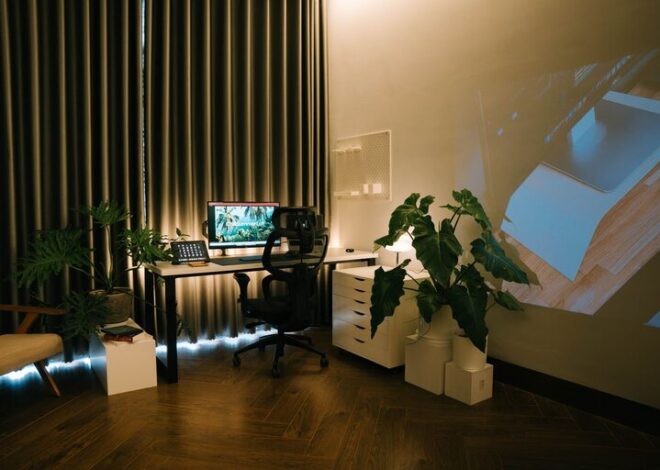
Adding a few small plants can brighten up your workspace and improve air quality. Plants help reduce stress and increase productivity.
Decorate with Inspiring Items
Use photos, artwork, or motivational quotes that make you feel positive and energized.
Use Calming Colors
Choose colors for your workspace that promote relaxation, such as soft blues, greens, or neutrals.
Minimize Distractions
Manage Noise
Consider noise-canceling headphones if your home is noisy. Alternatively, play soft background music or white noise to help maintain focus.
Set Boundaries
Communicate your work hours to family or housemates so they understand when you shouldn’t be disturbed.
Establish a Routine
Set a Start and End Time
Starting work at the same time daily helps create structure. Similarly, finishing at a set time helps you transition out of work mode.
Take Regular Breaks
Use the Pomodoro technique or schedule short breaks to stretch, hydrate, and rest your eyes.
Use Technology to Your Advantage
Productivity Tools
Apps for task management, time tracking, and note-taking can keep you organized and motivated.
Reliable Equipment
Invest in a fast internet connection, a quality webcam, and other hardware needed to prevent frustrations during work hours.
Keep Your Workspace Clean
End each day by spending a few minutes tidying your area. A clean and ready space will make it easier to start fresh the next morning.
Final Thoughts
Designing a home workspace that balances relaxation and productivity takes some thought, but the payoff is worth it. By selecting the right location, prioritizing ergonomics, organizing thoughtfully, and adding personal touches, you can create an environment where you enjoy working and can perform your best. Remember that your workspace is yours to shape and adjust as needed—so feel free to tailor it until it perfectly fits your needs.